OSHA Man Basket Requirements: Crane Personnel Platform Compliance
Personnel hoisting is among the most closely regulated lifting operations under OSHA standards, and for good reason. Unlike material lifting, hoisting workers poses significantly greater risks and requires additional planning, inspections, and engineered equipment. Whether you’re performing maintenance, steel erection, bridge work, or industrial construction, understanding OSHA’s man basket requirements is essential to maintaining a safe jobsite and avoiding costly violations.
Below, we’ll explain the key OSHA requirements for crane personnel platforms, when personnel hoisting is permitted, and best practices for maintaining compliance on every lift.
What Is an OSHA Man Basket?
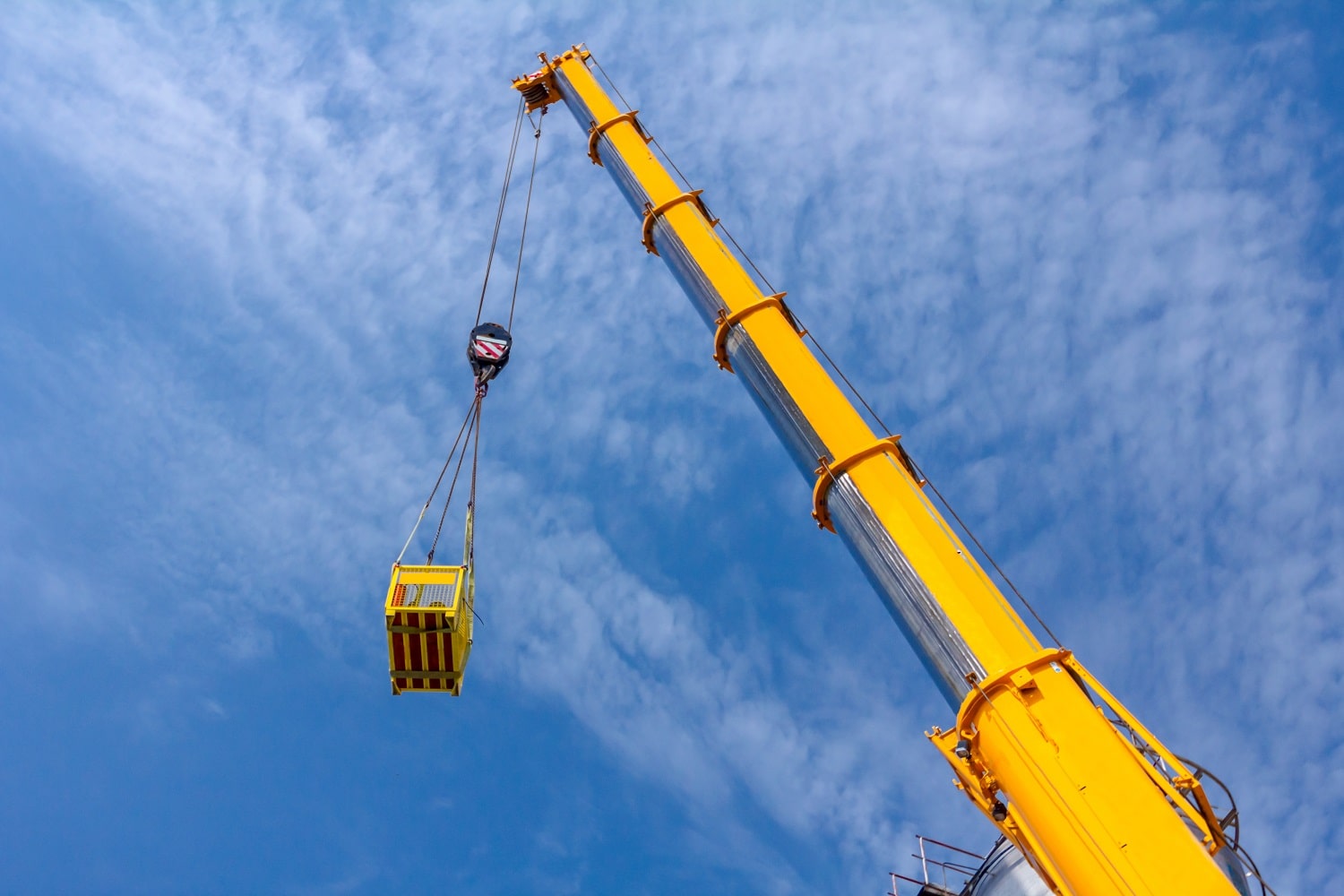
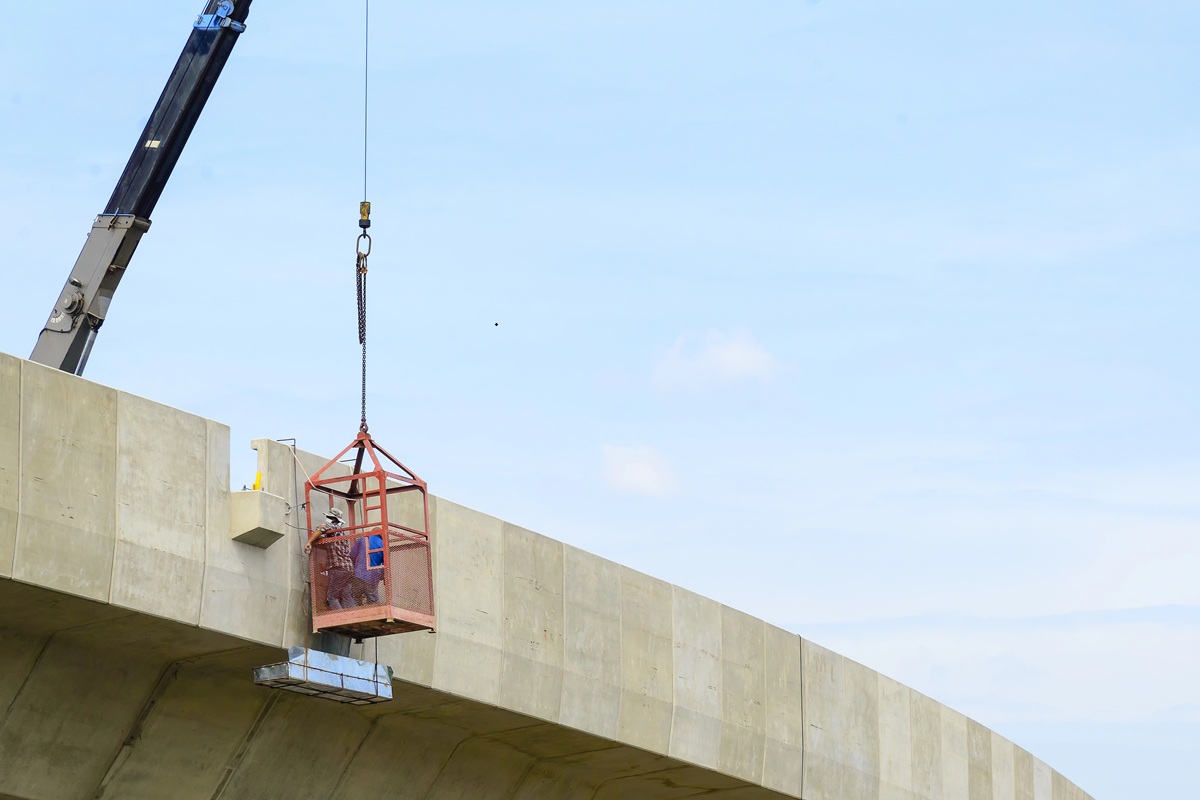
A man basket, also called a personnel platform, is a suspended work platform designed to safely lift workers using a crane. These platforms provide temporary access to elevated work areas when conventional access equipment is impractical.
Personnel platforms are commonly used for:
- Structural steel erection
- Bridge inspection and repair
- Industrial maintenance
- Utility work
- Construction projects requiring temporary elevated access
It’s important to distinguish a personnel platform from a material basket. Material baskets are designed solely to transport tools and equipment and are not engineered to safely carry workers. Using a material basket to lift personnel can violate OSHA regulations and expose workers to unnecessary hazards.
Which OSHA Standards Apply?
Several OSHA standards govern the use of personnel platforms supported by a crane.
OSHA 1926.1431
For construction projects, OSHA 1926.1431 sets the primary requirements for hoisting personnel with cranes or derricks. The regulation covers when hoisting personnel is permitted, crane setup, platform design, inspections, proof testing, trial lifts, communication, and operational procedures.
OSHA Interpretation Letters
OSHA periodically issues interpretation letters that clarify how existing regulations apply in real-world situations. Although these letters do not create new regulations, they help employers better understand OSHA’s expectations for personnel lifting operations.
ASME B30.23
Although not an OSHA regulation, ASME B30.23 is widely recognized across the lifting industry as the primary consensus standard for personnel lifting systems. Many manufacturers and employers use it alongside OSHA requirements to develop safer lifting procedures.
When Does OSHA Allow Personnel Hoisting?
OSHA considers crane-supported personnel lifting a last resort, not a preferred method of access. Before workers may be lifted by a crane, the employer must determine that conventional access equipment—such as scaffolding, aerial lifts, scissor lifts, or other personnel access systems—is infeasible or would pose a greater hazard.
When personnel hoisting is justified, employers should carefully evaluate:
- The work location and surrounding hazards
- Crane capacity and operating radius
- Ground conditions and crane stability
- Weather conditions
- Lift planning and communication
- Worker qualifications
Plan every personnel lift in advance to minimize risk and ensure all equipment and personnel are prepared before anyone leaves the ground.
OSHA Requirements for Crane Personnel Platforms
OSHA establishes detailed requirements for both the design of the personnel platform and the equipment used to suspend it.
Platform Design
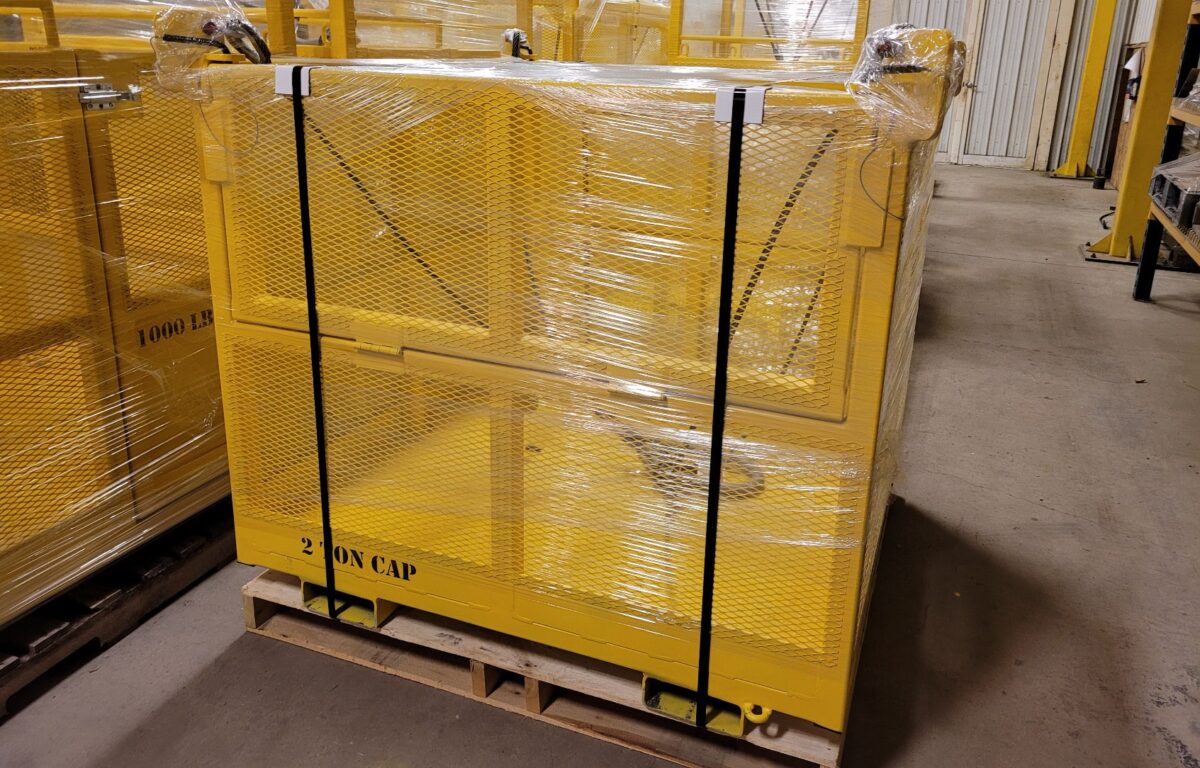
Personnel platforms should be engineered specifically for lifting workers. They must be structurally capable of supporting their intended loads while maintaining stability throughout the lift. The platform should provide adequate working space without allowing excessive occupant movement.
Required Safety Features
An OSHA-compliant personnel platform should include:
- Full perimeter guardrails
- Midrails
- Toeboards
- Slip-resistant flooring
- Grab Rails
- Expanded metal having openings no greater than ½ inch (1.27cm)
- Secure inward-swinging or self-closing access gate
- Approved anchorage points for personal fall arrest systems
- Smooth interior surfaces free from pinch points or sharp edges
- Proper drainage to prevent water accumulation
These features help reduce the risk of falls while enabling workers to safely enter, exit, and perform their tasks.
Platform Identification
Personnel platforms should be permanently marked with important information such as:
- Rated load capacity
- Maximum number of occupants
- Platform weight
- Manufacturer identification
- Serial or model number
Proper identification helps operators verify that the platform is suitable for the intended lift.
Rigging Requirements
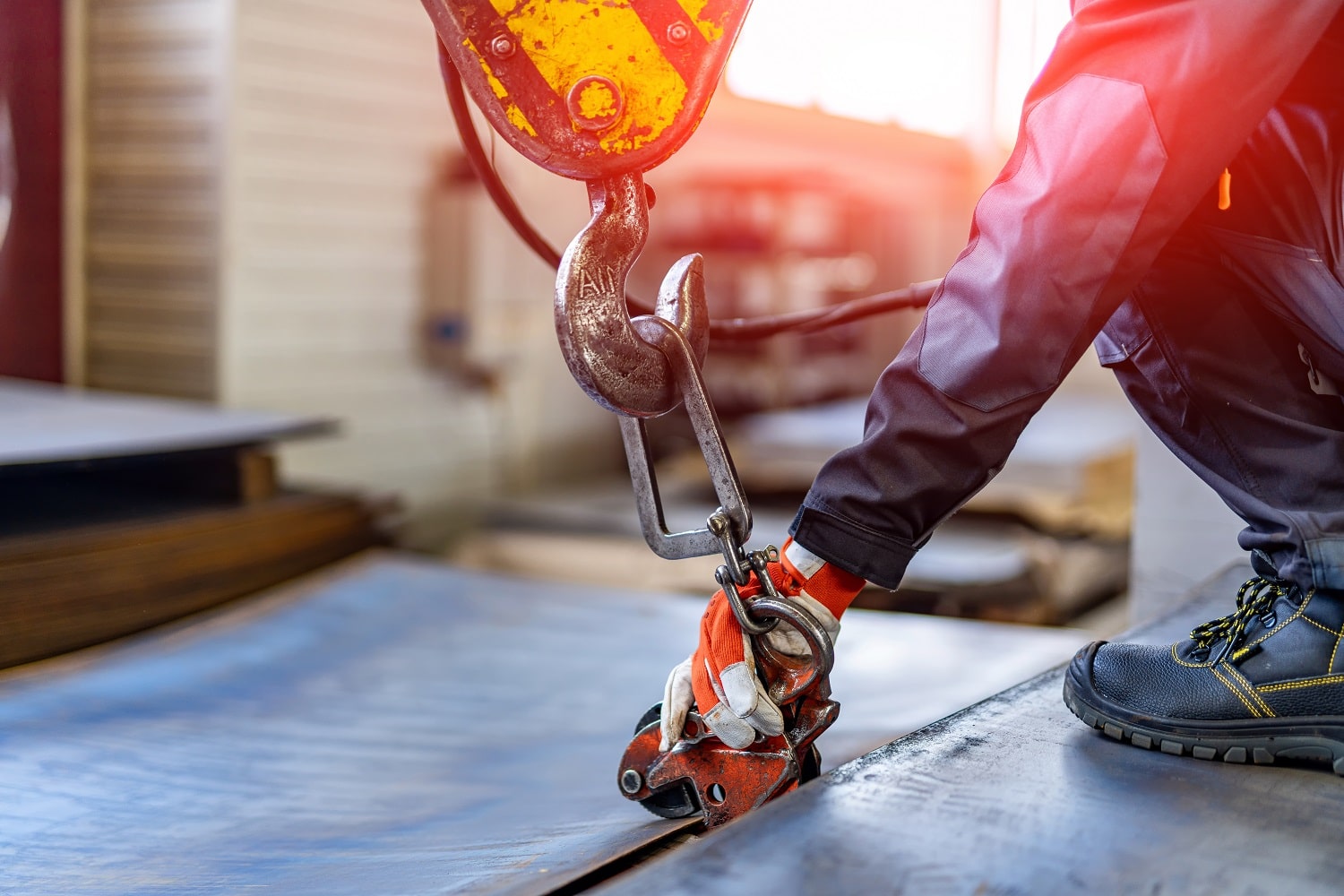
The rigging system is just as important as the platform itself. Components used for personnel lifting should be properly rated, inspected, and compatible with both the crane and the platform.
Common rigging components include:
- Wire rope slings
- Alloy chain slings
- Master links
- Shackles (Alloy)
- Positive-locking hooks
Inspect personnel lifting rigging before each use, and remove it from service if you notice excessive wear, deformation, corrosion, cracks, or other damage. Properly engineered rigging components help maintain platform stability throughout the lift.
Required Inspections and Testing
Before lifting personnel, OSHA requires several inspections and verification procedures to confirm that the entire lifting system is safe to operate.
Trial Lift
A trial lift is performed with the unoccupied platform along the entire intended travel path to confirm adequate crane capacity, proper clearances, a stable crane setup, and acceptable platform movement before workers enter the basket.
Trial lifts must be performed immediately prior to each shift in which personnel will be hoisted. Also perform a new trial lift whenever the crane is relocated, or the lift path changes significantly.
Proof Testing
Proof-test personnel platforms after fabrication or modification before placing them into service. Proof testing verifies that the platform can safely support its intended loads and that the structure performs as designed.
At each jobsite, prior to hoisting employees on the personnel platform, and after any repair or modification, the platform and rigging must be proof tested to 125 percent of the platform’s rated capacity. The proof test may be done concurrently with the trial lift.
Pre-Lift Inspection
Before every personnel lift, qualified personnel should inspect:
- The crane
- The personnel platform
- Hooks and rigging
- Slings and shackles
- Wire rope
- Hydraulic systems
- Safety devices
- Fall protection equipment
Any deficiencies should be corrected before lifting personnel.
OSHA Safe Work Practices
Safe personnel lifting depends on more than properly designed equipment.
Employers should ensure:
- Qualified crane operators perform the lift.
- Verify that the lift will not exceed 50 percent of the equipment’s rated capacity at any time during the lift
- Signal persons are designated as required.
- Occupants wear appropriate personal fall protection.
- Communication methods are established before lifting begins.
- Crane movements remain slow and controlled.
- Sudden starts, stops, and swinging are avoided.
- Workers remain inside the platform during lifting operations.
- Weather conditions are continuously monitored
- Occupants wear appropriate personal fall protection.
- Communication methods are established before lifting begins.
- Crane movements remain slow and controlled.
- Sudden starts, stops, and swinging are avoided.
- Workers remain inside the platform during lifting operations.
- Weather conditions are continuously monitored.
Strong communication among the crane operator, signal person, and platform personnel helps prevent misunderstandings that could create hazardous situations.
Common OSHA Violations
Many OSHA citations involving personnel platforms stem from preventable mistakes.
Some of the most common violations include:
- Using a material basket instead of an approved personnel platform
- Failing to conduct required trial lifts
- Skipping pre-lift inspections
- Using improper or damaged rigging
- Overloading the platform
- Missing or damaged fall protection equipment
- Lifting personnel without proper planning
- Operating cranes beyond their rated capacity
Developing standardized lifting procedures and training personnel can significantly reduce these risks.
Choosing an OSHA-Compliant Personnel Platform
Selecting the right personnel platform involves more than meeting minimum regulatory requirements. Buyers should look for platforms engineered specifically for personnel lifting, built from high-quality materials, and designed to work with the intended crane configuration.
When evaluating a platform, consider:
- Structural engineering and build quality
- Clearly marked rated capacities
- OSHA-compliant safety features
- Quality welding and fabrication
- Compatibility with your crane and rigging system
- Manufacturer documentation and inspection recommendations
Working with an experienced manufacturer, such as ELT, can help ensure the platform matches your lifting application and supports long-term compliance and worker safety.
Putting OSHA Man Basket Requirements into Practice
OSHA’s personnel platform requirements are designed to protect workers during one of the highest-risk lifting operations on a jobsite. From engineered platform design and proper rigging to inspections, trial lifts, and safe operating procedures, each requirement helps reduce accident risk.
Whether you’re replacing an existing platform or buying one for a new application, investing in a properly engineered crane personnel platform is essential to maintaining OSHA compliance and protecting your crew. At ELT, we design and manufacture high-quality crane personnel platforms built for demanding industrial and construction environments, helping contractors and lifting professionals perform personnel hoisting operations with confidence.